

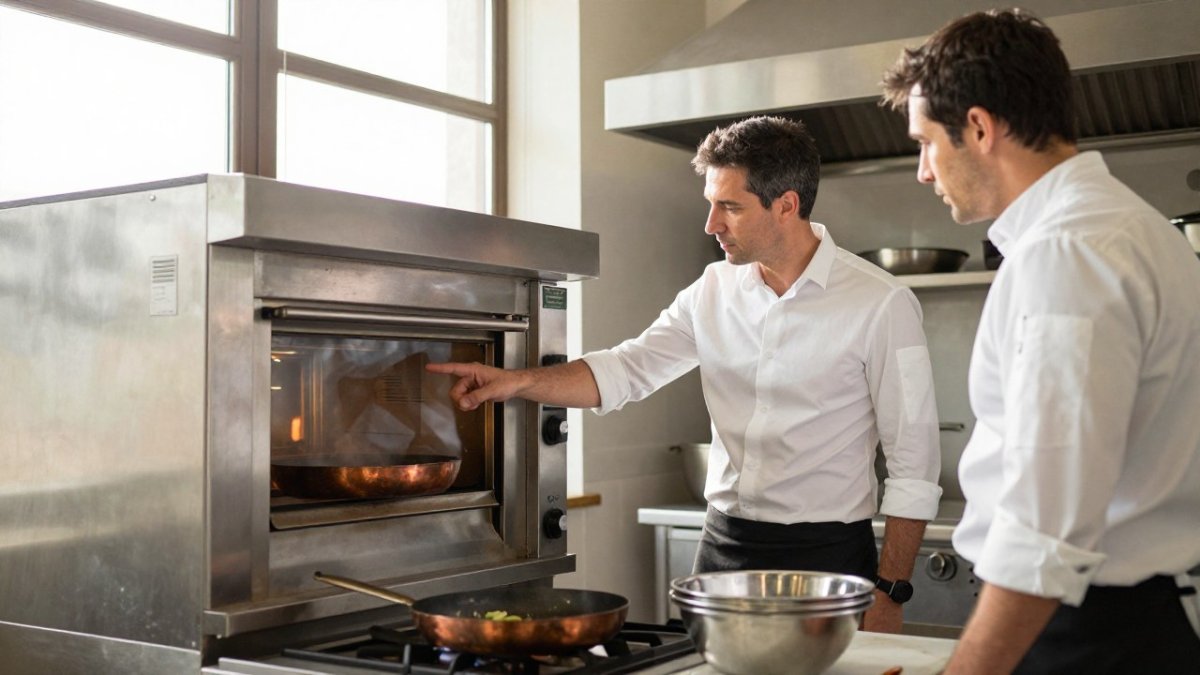
Last Updated: November 12, 2026
Quick Summary
Hotel F&B consulting improves restaurant profitability by auditing the operation across seven workstreams, then rebuilding the P&L line by line. Consultants start with a full audit covering concept, menu pricing, labor, food safety, supply chain and revenue channels, then fix the levers that leak the most money.
- Hotel F&B audits cover seven workstreams, from concept and positioning to revenue and channel analysis.
- Menu engineering sorts items by contribution margin and popularity, making it the fastest lever in most hotel restaurants.
- Labor standards should be set in hours per cover, not just labor cost percentage.
- Separate food and beverage P&Ls so each outlet stands on its own.
- Waste tracking and yield analysis reduce cost and waste at the same time.
Table of Contents
- What Hotel Food and Beverage Consulting Services Actually Cover
- Building a Hotel Food and Beverage Strategy That Survives Contact With the P&L
- Operational Assessments, Facility Design, and MEP Requirements
- Food Safety Compliance and Service Standards
- Labor Optimization and Post-Pandemic Staffing Models
- How Hotel Restaurant Profitability Gets Rebuilt Line by Line
- Supply Chain, Vendor Relations, and Sustainability Metrics
- Calculating ROI on a Hotel F&B Consulting Engagement
- Frequently Asked Questions
What Hotel Food and Beverage Consulting Services Actually Cover
Hotel F&B consulting is the outside expertise hotels bring in when food cost drifts, labor outruns revenue, or a restaurant guests walk past.
It starts with a full audit, not a pep talk.
A hotel F&B operation is a business inside a business: its own P&L, staffing model, and guest expectations, but also the hotel’s brand standards, rate positioning, and banquet calendar.
The Seven Core Workstreams of a Hotel F&B Audit
Hotel F&B audits commonly cover several workstreams. Each one produces its own findings, and each one feeds the others.
- Concept and positioning review, does the restaurant match the guest the hotel actually attracts?
- Menu and pricing analysis, contribution margin by item, not just food cost percentage
- Operational assessment, service flow, ticket times, and station design
- Labor modeling, scheduled hours against covers, by daypart
- Food safety and compliance review, HACCP plans, temperature logs, and inspection readiness
- Supply chain and vendor review, contract terms, spec consistency, and delivery reliability
- Revenue and channel analysis, room charge capture, third-party delivery, and outlet mix
The order matters less than the discipline. A hotel that fixes menu pricing without fixing labor usually just moves the loss.
Building a Hotel Food and Beverage Strategy That Survives Contact With the P&L
A hotel food and beverage strategy is only as good as its first bad month. The difference is whether the plan was built from the P&L backward or from a concept deck forward.
We build from the P&L backward.
Concept Development and Market Positioning
Concept work starts with a hard question: who is actually in the building? A convention-center hotel feeds a different guest than a weekend resort, and the restaurant has to serve the guest who shows up on a Tuesday, not the one in the brochure.
Market positioning follows the same logic. Price point, service style, and menu breadth must line up with what the market will bear and what the hotel’s rate structure promises. Our new concept development work starts here because everything downstream depends on it.
Menu Engineering and Culinary Innovation
Menu engineering is the discipline of pricing and placing dishes by contribution margin and popularity, not by chef preference. It’s the fastest lever in most hotel restaurants, and the most ignored.
The method is straightforward. Sort every item into four buckets by margin and sales volume, then act:
- High margin, high volume, protect these, feature them, never let them slip
- High margin, low volume, reposition on the menu, rewrite the description
- Low margin, high volume, re-engineer the recipe or raise the price
Culinary innovation belongs here too, but with a leash. A new dish earns its place by margin and by whether the kitchen can execute it at volume on a busy Saturday. For a deeper look at pricing tactics, our team published a full breakdown of menu engineering pricing strategies.
Operational Assessments, Facility Design, and MEP Requirements
An operational assessment walks the kitchen and the dining room the way a busy Friday night does.
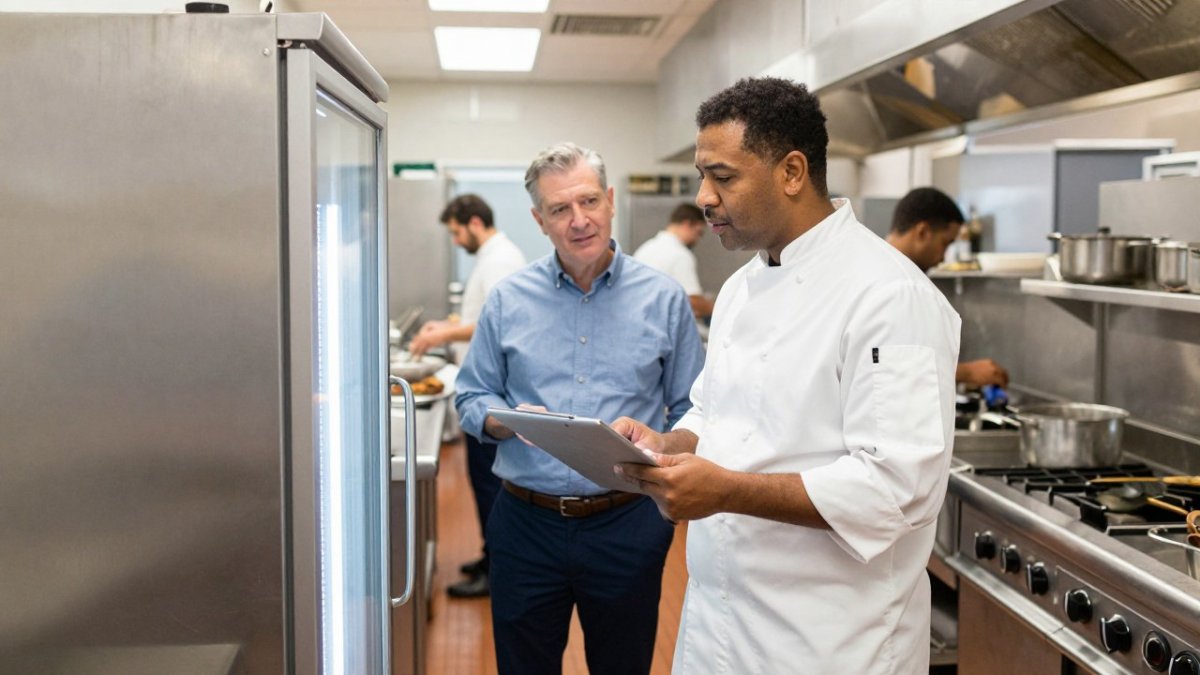
Facility design and MEP requirements come next, because layout problems can’t be trained away. Mechanical, electrical, and plumbing capacity decides what equipment you can run and where.
Zoning and local code review matter here as well. Our operations consulting team runs these assessments as a standalone engagement or as the front end of a design project.
Food Safety Compliance and Service Standards
Food safety compliance is the one area where a hotel has no room to improvise. A single failed inspection can cost a hotel its banquet contracts, not just a fine.
The work here is unglamorous and essential:
- A written HACCP plan that matches what the kitchen actually does
- Temperature logs that get filled in, not backfilled
- Cooling and reheating procedures posted at the station
- Allergen protocols that reach the server, not just the line
Service standards sit alongside compliance. Guests judge a hotel restaurant on consistency: the greeting, the timing, the check-back, the room charge. Written SOPs and staff training turn good service from a personality trait into a system.
Labor Optimization and Post-Pandemic Staffing Models
Labor is where hotel F&B margins quietly disappear. The old model, schedule to a forecast, then adjust on the fly, now produces overtime and turnover at the same time.
The better model schedules to a realistic forecast and builds in cross-training so the kitchen can flex without overtime. That requires three things most hotel F&B departments lack: a demand forecast by daypart and outlet, a labor standard in hours per cover (not just a labor cost percentage), and a schedule published far enough ahead to be trusted.
Building the Forecast Before the Schedule
A labor model is only as good as the forecast underneath it. Pull 12 months of covers by outlet, day of week, and daypart, then layer in group blocks, banquet event orders, occupancy pace, and local event calendars.
From there, set a labor standard per position, server covers per shift, cook hours per 100 covers, bartender hours per beverage cover, and compare scheduled hours against that standard weekly.
The Turnover Math Owners Underestimate
High turnover is usually treated as an HR problem. In hotel F&B it is a P&L problem. Replacing a line cook or server costs real money in recruiting, onboarding, training shifts, and the productivity dip before full effectiveness.
Reducing turnover starts with the schedule. Predictable schedules, posted two weeks out, with consistent shift patterns, cost less in the long run than a reactive schedule that saves a few hours a week and loses a cook a month.
Hybrid and Cross-Trained Staffing Models
The post-pandemic staffing shift most hotel F&B operations still haven’t absorbed is the move from narrow, single-station roles to cross-trained, multi-station roles. A server who can tend bar, a cook who can work garde manger and the grill, a banquet captain who can run a la carte lunch, each reduces the positions that must be filled on any given shift.
A few shifts that work:
- Cross-train front and back of house on high-volume stations, and pay a skill premium for the cross-trained roles
- Build schedules around dayparts, not full shifts, so a lunch-only server isn’t carried through a dead afternoon
- Track labor cost per cover by outlet, weekly, against the labor standard, not just against last month
- Cut the positions that exist out of habit, not need, and reinvest part of the savings in retention
Labor optimization isn’t about cutting heads. It’s about matching scheduled hours to actual covers, outlet by outlet, and then keeping the people you trained.
How Hotel Restaurant Profitability Gets Rebuilt Line by Line
Hotel restaurant profitability gets rebuilt one line at a time, and beverage usually has the most room. Beverage carries better margins than food in most hotel outlets, yet gets the least attention.
The rebuild follows a sequence:
- Separate food and beverage P&Ls so each outlet stands on its own
- Rebuild the menu around contribution margin
- Match labor to daypart demand
- Reopen dayparts that were cut and never restored
- Renegotiate vendor terms on the top spend categories
Daypart expansion deserves a hard look. Our beverage dayparts and margin optimization work exists because this lever is so often missed.
Supply Chain, Vendor Relations, and Sustainability Metrics
Supply chain management in hotel F&B comes down to specs and use. A hotel buying the same product under five different item codes has no use at all, and no leverage.
Vendor Scorecards and Contract Mechanics
Start with a spend cube: every purchase by category, vendor, outlet, and item code. Consolidate duplicate item codes first, because a distributor prices against the volume it can see.
Contract review belongs on a calendar, not on autopilot. For hotels using third-party dining operators, those agreements deserve independent review before renewal, which is where our food service contract consulting fits.
Sustainability Metrics That Also Cut Cost
Sustainability in hotel F&B is usually treated as a marketing story. Treated as an operating metric, it is a cost story.
Waste tracking means weighing and logging trim, spoilage, overproduction, and plate waste by outlet, weekly.
A workable sustainability framework for a hotel F&B operation has four parts:
- Measure first, a weekly waste log by outlet and category, in dollars, not just pounds
- Set a reduction target, a percentage reduction in waste cost per cover over a defined period
- Tie purchasing to it, par levels and order quantities built from actual usage, not habit
- Verify with a third party where it matters, green certifications and waste-diversion programs are only credible when the underlying data is audited
Watch out: a sustainability program that reports pounds diverted but never converts them to dollars tends to lose executive support in the first budget cycle.
Waste tracking, yield analysis, and portion control reduce cost and waste at the same time.
Calculating ROI on a Hotel F&B Consulting Engagement
Consulting ROI is a calculation, not a promise. Estimating the recoverable dollars before an engagement starts gives you a baseline to measure against.
A simple framework we use:
| Lever | What to Measure | Baseline First |
|---|---|---|
| Menu margin | Contribution margin per item | Current menu mix |
| Labor | Labor cost per cover by outlet | Last 8 weeks of schedules |
| Beverage | Beverage margin by daypart | Outlet-level beverage P&L |
| Procurement | Spend by category and vendor | Top 20 spend items |
| Waste | Spoilage and trim cost | Weekly waste log |
Add the recoverable dollars from each lever, subtract the engagement cost, and you have a defensible ROI estimate. The point isn’t a big number in a deck.
Hotel F&B operations carry too much fixed cost to run on guesswork.
Frequently Asked Questions
What does a hotel food and beverage consultant do?
A hotel F&B consultant reviews the full dining operation: concept and market positioning, menu engineering, food and labor cost, kitchen and MEP design, food safety compliance, vendor contracts, and service standards. The work usually starts with a structured F&B audit that benchmarks the outlet against comparable hotels, then moves into a prioritized action plan. Engagements can be a one-time assessment or an ongoing advisory role through a repositioning or new build. The deliverable is a financial and operational roadmap the ownership group and management team can execute, not a generic deck.
How can a food and beverage consultant improve hotel restaurant profitability?
Profitability work usually attacks three levers at once. First, menu engineering rebalances pricing and mix so high-margin items sell more. Second, cost control tightens purchasing, portioning, and inventory so food cost percentage drops without touching quality. Third, labor optimization aligns schedules and station design to actual cover counts. Each lever is measured against a baseline, so the ownership group can see the dollar impact per outlet. Consultants also flag revenue management gaps, such as underused private dining space or weak breakfast capture rates, that raise revenue without adding fixed cost.
When should a hotel hire a food and beverage consulting firm?
Common triggers include a new build or mixed-use development that needs F&B concepts before the kitchen is drawn, an outlet that has missed budget for two or more quarters, a brand repositioning or PIP refresh, or a change of management company. Owners also bring consultants in ahead of an acquisition or refinancing, when a third-party F&B audit strengthens the underwriting. If the outlet is stable and the team has strong financial controls, an engagement may not be necessary. The clearest signal is when the same problems keep recurring without a measurable fix.
How much do hotel food and beverage consultants charge?
Fees vary widely by scope, asset size, and whether the work is a one-time audit or a multi-month advisory engagement. Hourly rates, fixed project fees, and retainer models are all common in the consulting market. Because pricing depends on the number of outlets, the depth of the audit, and the timeline, the most reliable step is to request a scoped quote. TNI Restaurant Consultants publishes its pricing information on its website, so ownership groups can review current rates before an introductory call.
