

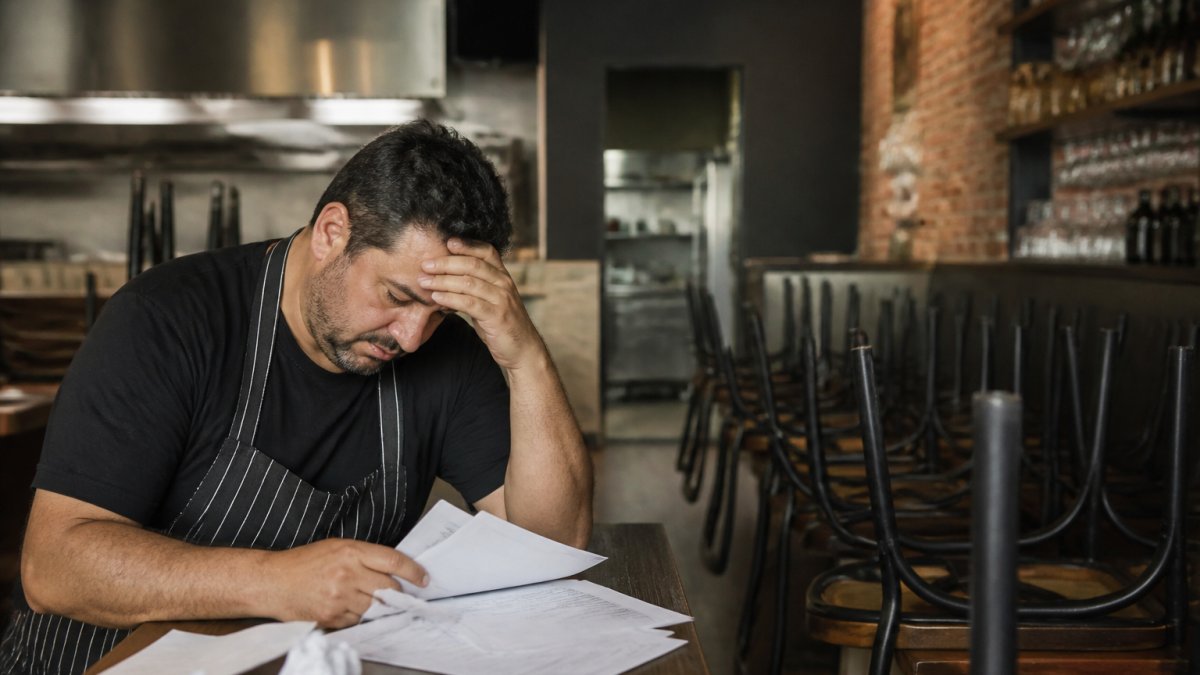
Last Updated: October 24, 2026
Quick Summary
A restaurant failing shows warning signs like declining sales and traffic, cash flow problems, rising food and labor costs, slipping menu consistency, negative reviews, high staff turnover, and owner inaction. Track weekly revenue against the same week last year and calculate cash runway every Monday to catch trouble early.
- Compare weekly revenue against the same week last year, not last month.
- Calculate cash runway by dividing cash on hand plus available credit by average weekly net cash burn.
- Target a prime cost in the low-to-mid 60% range for full-service operators.
- Run prime cost weekly, since monthly reviews hide a bad week inside a good one.
- Follow a 30-60-90 day plan: stabilize cash, reset menu, then rebuild the team.
Table of Contents
- 1. Declining Sales and Customer Traffic
- 2. Restaurant Cash Flow Problems You Can No Longer Hide
- 3. Food and Labor Costs Eating Your Restaurant Profit Margin
- 4. Food Quality and Menu Consistency Slipping
- 5. Negative Reviews and Customer Complaints Piling Up
- 6. Staff Turnover, Tardiness, and Hiring Trouble
- 7. Owner Inaction and Weak Leadership
- How to Save a Failing Restaurant: Build a Restaurant Turnaround Plan
- Frequently Asked Questions
1. Declining Sales and Customer Traffic
A restaurant failing rarely collapses overnight. It leaks. Sales dip a little each week, and the drop is easy to blame on weather, a holiday, or a slow month. Operators should stop guessing and start comparing.
Declining sales are the first hard signal that a restaurant is in trouble. Look at covers, not just dollars. If your average ticket is up but your guest count is down, you have a traffic problem hiding behind a pricing effect.
What the Numbers Should Tell You
Pull four numbers every Monday morning:
- Net sales, compared with the same week a year ago
- Guest count, or covers per shift
- Average check per guest
A common mistake is watching only the top line. Many operators find that sales look flat while traffic quietly falls. That gap usually means prices rose to cover the loss. It works for a while. Then regulars stop coming.
If sales are down and traffic is down together, treat it as a real warning sign, not a bad week.
2. Restaurant Cash Flow Problems You Can No Longer Hide
Cash flow is the clearest early warning of a failing restaurant. Profit on paper means nothing if you cannot pay vendors on time. A restaurant can show a positive net income on its profit and loss statement and still run out of cash, because the P&L records sales when they are earned, not when the money lands. Watch for these symptoms:
- Stretching vendor payments past terms
- Delaying payroll or tips
- Relying on a credit line to cover routine bills
Restaurant cash flow problems usually start small. One late payment becomes a habit. Suppliers start demanding cash on delivery, which tightens the squeeze. A common mistake is treating a cash crunch as a sales problem when it is often a timing and control problem.
The Cash Runway Test
Instead of eyeballing the bank balance, calculate cash runway every Monday. Take the cash on hand plus undrawn available credit, then divide by average weekly net cash burn over the last four weeks.
- More than 8 weeks: stable, keep monitoring.
- 4 to 8 weeks: warning zone. Freeze discretionary spending and pull forward receivables.
- Under 4 weeks: crisis. This is the point to call your lender, accountant, or a turnaround specialist before you miss a payroll or a rent check.
A second check is days payable outstanding (DPO). If you are paying vendors in 45 days on 30-day terms, you are financing operations with supplier goodwill, and that goodwill has a limit.
What Actually Causes the Crunch
Most cash crises trace to one of four mechanisms: sales volume falling faster than fixed costs, receivables from catering or third-party delivery platforms sitting unpaid, inventory and waste tying up cash, or debt service that was sized to a revenue level the restaurant no longer hits. Each has a different fix. Cutting staff will not solve a receivables problem, and renegotiating a lease will not solve a food-cost problem.
If cash on hand plus available credit covers less than four weeks of operating expenses, treat it as an emergency. Missing payroll or a sales-tax remittance can trigger penalties and, in some cases, personal liability for owners who are responsible parties. Get professional advice before the deadline, not after.
Check your cash position weekly, not monthly. If the balance routinely dips below what you owe in the next ten days, the business is living on borrowed time.
Use the cash runway test every Monday to see how long the business can operate before cash runs dry.
| Cash runway | Status | What to do |
|---|---|---|
| More than 8 weeks | Stable | Keep monitoring |
| 4 to 8 weeks | Warning zone | Freeze discretionary spending, pull forward receivables |
| Under 4 weeks | Crisis | Call lender, accountant, or turnaround specialist |
3. Food and Labor Costs Eating Your Restaurant Profit Margin
Your restaurant profit margin is where trouble shows up in plain numbers. Two costs decide most of it: food and labor. When either drifts, the margin shrinks fast.
Watch for these cost-control failures:
- Rising food costs with no menu price change
- Portion sizes creeping up without a recipe standard
- High waste and spoilage you cannot explain
Benchmarks Worth Checking Against
Most full-service operators target a prime cost, the combined food and labor cost as a share of sales, in the low-to-mid 60% range, with quick-service concepts often running lower.
Calculate it like this:
Prime cost % = (Cost of goods sold + Total labor cost) ÷ Net sales × 100
Run it every week, not once a month. Monthly reviews hide a bad week inside a good one. If food cost climbs while sales fall, you have a double problem: shrinking revenue and rising cost at the same time.
Unit Economics: The Numbers Behind the Numbers
Prime cost is a summary. To find the cause, drop one level into unit economics:
- Contribution margin per menu item: menu price minus food cost. A dish with a 70% food cost may still be worth keeping if it drives traffic, but you need to know the number before you decide.
- Break-even sales: fixed costs divided by contribution margin ratio. This tells you the sales level the restaurant must hit before it earns a dollar of profit. If break-even sales are above realistic capacity, the cost structure, not the menu, is the problem.
- Menu-item profitability: use menu engineering to sort items by popularity and contribution margin. The classic four quadrants (stars, plowhorses, puzzles, dogs) tell you what to promote, reprice, re-engineer, or cut.
Pull a weekly cost report that shows food cost, labor cost, and prime cost side by side for the last 13 weeks. A trend line beats a single snapshot every time, and 13 weeks covers a full quarter of seasonality.
Menu engineering helps here. It shows which dishes earn their place and which quietly lose money. For a deeper look at the numbers, see our guide on how to improve restaurant profit margins.
4. Food Quality and Menu Consistency Slipping
Guests forgive a lot. They do not forgive a dish that tastes different every visit. Menu consistency is the quiet foundation of repeat business. When it slips, the decline is already underway.
Signs to watch:
- Regulars sending back dishes they used to love
- Recipes living in cooks’ heads, not on paper
- Different portions from shift to shift
A common mistake is adding new dishes to chase traffic. That usually makes consistency worse. Fix the core menu first. Standard recipes, clear plating standards, and simple line checks do more than a new special ever will.
5. Negative Reviews and Customer Complaints Piling Up
Online reviews are a lagging signal, not a leading one. By the time complaints pile up publicly, the problem has been building for months. Read the pattern, not the star rating.
Look for repeated themes:
- Comments about slow service or cold food
- Complaints about a specific dish or shift
- Guests saying “it used to be better”
Customer complaints that repeat are evidence, not noise. The thing nobody tells you about reviews is that the private complaints matter more. Ask your servers what guests say at the table.
6. Staff Turnover, Tardiness, and Hiring Trouble
(/7-ways-to-reduce-restaurant-labor-costs-without-destroying-the-guest-experience/).
7. Owner Inaction and Weak Leadership
The hardest warning sign to see is the one in the mirror. Owner inaction turns a fixable problem into a closure.
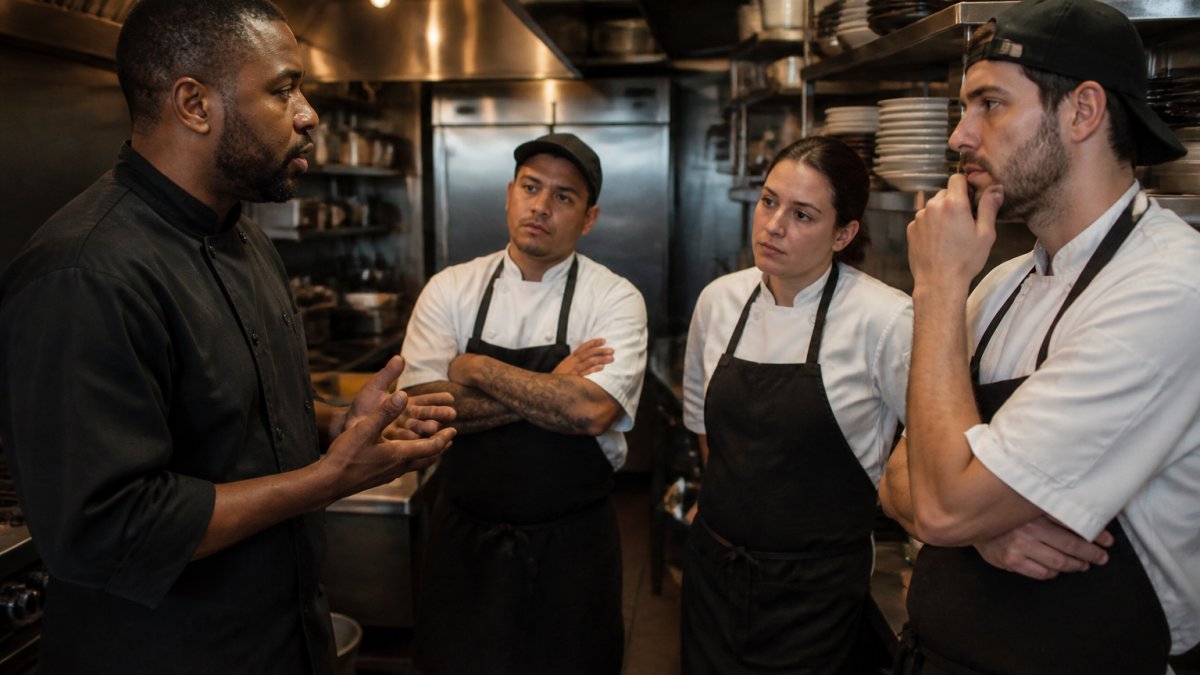
Watch for these leadership failures:
- Avoiding the financials because the news is bad
- Blaming the market, the weather, or the staff
- Delaying hard calls on menu, pricing, or people
- No written plan, no weekly review, no accountability
A restaurant failing is rarely a mystery. The numbers and the people tell you the truth. The question is whether the owner listens before it is too late. If you recognize yourself here, that is the moment to act.
How to Save a Failing Restaurant: Build a Restaurant Turnaround Plan
Here is how to save a failing restaurant: separate a temporary dip from a structural problem, then act in a set order. A slow month is not a failing restaurant. Falling traffic, thin cash, and staff churn together are. Name the real problem before you spend a dollar fixing it.
A restaurant turnaround roadmap walks through the full seven-step process. Start with these priorities:
The First 30, 60, and 90 Days
- Days 1-30: Stabilize cash. Rebuild the weekly numbers, cut waste, and fix the worst service gaps.
- Days 31-60: Reset the menu and pricing. Use menu engineering to protect margin.
- Days 61-90: Rebuild the team and the systems. Train, schedule to sales, and lock in standards.
If you are checking cost benchmarks, a guide to prime cost shows how to calculate it. And when you want outside help, consider the benefits of hiring professional restaurant consultancy services.
Frequently Asked Questions
What are the top signs a restaurant is failing?
The clearest signs are falling sales and customer traffic, recurring cash flow problems, food and labor costs that push your profit margin below healthy benchmarks, inconsistent food quality, a rise in negative reviews, high staff turnover, and owner inaction on problems everyone else can see. One sign alone may be a rough month. Three or more showing up together, especially over several months, points to a structural problem that needs a turnaround plan rather than a quick fix.
How can I tell if my restaurant has a cash flow problem?
Watch for late vendor payments, relying on credit to cover payroll, dipping into reserves for routine operating costs, and a growing gap between sales on paper and cash actually in the bank. Check your weekly cash position against payables and payroll before they come due. If you are consistently short even when revenue looks stable, the issue is usually cost control or pricing, not just sales volume, and it needs attention before it becomes a closure risk.
When should a restaurant owner hire a consultant?
Bring in outside help when you have identified two or more warning signs and internal fixes have not moved the numbers after a full quarter, or when you need to act fast on cash flow, margins, or a turnaround plan and do not have the bandwidth to diagnose it yourself. A consultant can audit food and labor costs, menu profitability, and operations, then prioritize the changes that protect traffic and margins first.
What is the 30/30/30 rule for restaurants?
The 30/30/30 rule is a common industry guideline that roughly a third of revenue goes to food and beverage costs, a third to labor, and the remaining third covers occupancy, other operating costs, and profit. It is a starting reference, not a strict law, since rent and concept type shift the split. If your food or labor costs run well above one third of sales, that gap is usually where a failing restaurant’s margin is disappearing.
A failing restaurant can be saved, but only if the owner moves before the cash runs out. That is where we come in. TNI Restaurant Consultants brings hands-on operating experience and financial discipline to every turnaround, from food and labor analysis to menu engineering and SOP development. Our team has launched over 89 new brands and worked on more than 800 openings or remodels. Get started with TNI Restaurant Consultants and turn the warning signs into a plan you can run.
