
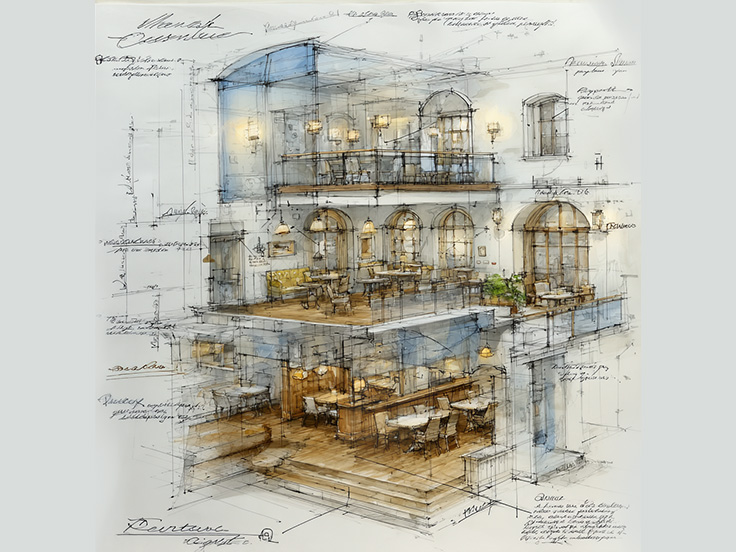
Trend Audit: A Strategic Assessment of Restaurant Relevance, Performance, and Opportunity
In a restaurant environment defined by rapid change, shifting consumer behavior, and constant cultural noise, the greatest risk is not disruption. The greatest risk is misalignment.
A Trend Audit is TNI Restaurant Consultants’ comprehensive evaluation of how a restaurant, foodservice, or hospitality concept currently performs against prevailing restaurant trends, consumer expectations, menu behaviors, design standards, and operational realities. It is a structured, objective assessment designed to reveal where a concept is aligned with today’s market, and where it is quietly falling behind.
Rather than focusing on what is new, a Trend Audit focuses on what is working, what is no longer working, and why.
Seeing the Concept as the Market Sees It
Over time, even well-run restaurant concepts develop blind spots. Menus evolve incrementally, dining rooms age gradually, and brand positioning often reflects past success more than current guest perception. Internal teams naturally view the business through the lens of history, familiarity, and operational constraint.
A Trend Audit deliberately steps outside that internal perspective.
It evaluates the concept as a guest, investor, and modern consumer would experience it today, through the lens of contemporary food trends, beverage expectations, value perception, cultural relevance, and experiential design. This outside-in view is critical for understanding whether a concept still occupies a clear, compelling position in the market, or whether it has become indistinct amid newer competitors and changing consumer priorities.
Assessing Relevance Across the Entire Restaurant Ecosystem
A Trend Audit is not limited to food trends alone. It examines the entire restaurant ecosystem, recognizing that relevance is created at the intersection of menu, experience, brand, and operations.
Menus are evaluated for flavor relevance, ingredient choices, portioning, structure, and language, including how well they align with current consumer demand for quality, value, comfort, functionality, and discovery. Beverage programs are assessed for cultural currency, margin opportunity, and alignment with evolving dayparts, including non-alcohol, functional, and social beverage trends.
The physical environment is reviewed for how it signals freshness, intent, and brand clarity, from layout and flow to material choices and experiential cues. Brand expression is considered in terms of tone, storytelling, and whether it feels contemporary, credible, and emotionally resonant.
Importantly, all of this is examined in the context of operational and financial reality, ensuring that relevance is not confused with impracticality.
Trend Alignment Without Trend Chasing
One of the most common challenges facing restaurant brands is accidental trend participation. Many concepts are already engaging with trends, sometimes successfully, sometimes awkwardly, without having made a conscious strategic choice to do so.
A Trend Audit identifies where trends are being applied intentionally, where they are being applied by default, and where they are absent altogether. It evaluates whether current food, beverage, and design trends are reinforcing the brand’s identity or diluting it, and whether the concept’s positioning still matches how consumers make dining decisions today.
This process often reveals that the issue is not a lack of innovation, but misdirected innovation, effort invested in areas that no longer matter as much to the guest, while higher-impact opportunities remain underdeveloped.
Consumer Perception, Value, and Competitive Context
Modern restaurant performance is inseparable from consumer perception of value. Value is no longer defined solely by price; it is shaped by portioning, quality cues, experience, clarity, and emotional return.
A Trend Audit evaluates how a concept’s value proposition compares to current market norms and direct competitors, identifying where pricing, menu architecture, or experience may feel out of step with guest expectations. It also considers how broader economic pressure, wellness behavior, global flavor fluency, and changing social habits influence how guests judge whether a restaurant feels “worth it.”
This perspective is especially critical for brands that were built in a different economic or cultural moment and have not fully recalibrated to today’s decision-making logic.
Identifying Risk Before It Becomes Decline
Trend Audits are not reactive tools; they are preventative diagnostics.
They surface early warning signs of decline long before traffic or sales data makes the problem obvious. This includes menu items that no longer justify their complexity, formats that feel dated despite operational efficiency, and experiential elements that subtly signal stagnation to modern diners.
Just as importantly, Trend Audits identify what should not change. Many restaurants undermine their own equity by overcorrecting or chasing trends that conflict with their core strengths. The audit distinguishes between areas that require evolution and areas that should be protected and reinforced.
Grounded in Commercial Reality, Not Theory
At TNI, trend analysis is never separated from execution.
Every insight produced through a Trend Audit is evaluated against labor availability, kitchen capacity, food cost stability, supply chain reliability, throughput, and scalability. Trends that cannot be supported operationally or economically are not treated as opportunities, regardless of their cultural visibility.
This ensures the audit produces clarity, not confusion, and creates a realistic baseline from which strategic decisions can be made.
What a Trend Audit Ultimately Delivers
A Trend Audit provides leadership teams with a shared, objective understanding of where a restaurant concept truly stands in today’s market. It replaces intuition with insight and replaces assumption with evidence.
For some organizations, the audit confirms that the concept remains more relevant than internal sentiment suggests. For others, it reveals that incremental drift, not dramatic failure, has created a growing gap between brand intent and guest experience.
In both cases, the value lies in clarity.
The TNI Perspective on Trend Audits
TNI Restaurant Consultants approach Trend Audits as strategic instruments, not evaluations for their own sake. We combine global restaurant trend intelligence, real-world operational experience, and consumer behavior analysis to assess concepts honestly, constructively, and without agenda.
A Trend Audit does not prescribe change for the sake of change.
It establishes a clear, informed picture of relevance, alignment, and opportunity.
Before deciding where to go next, a restaurant must understand where it truly is.
A Trend Audit provides that understanding.
If you’d like, I can next:
- Create a Trend Audit vs. Trend Mapping narrative comparison
- Condense this into a search-optimized service summary
- Adapt it for private equity, multi-unit, or hotel clients
- Align language precisely with your TNI Group brand voice
Just tell me how you want to deploy it.
yes - please Trend Audit vs. Trend Mapping narrative comparison in a matrix format
Below is a Trend Audit vs. Trend Mapping narrative comparison presented in a matrix format.
It is written to be SEO- and AI-search friendly, while still reading as strategic guidance, not marketing copy. This works well as a standalone section on your website, or as a bridge between the two service pages.
Trend Audit vs. Trend Mapping: Two Distinct Strategic Tools, One Cohesive Approach
While Trend Audits and Trend Mapping are closely related, they serve very different strategic purposes. Together, they form a complete framework for understanding where a restaurant concept stands today and how it should evolve moving forward.
The distinction is not about better or worse, it is about diagnosis versus direction.

Strategic Dimension | Trend Audit | Trend Mapping |
Primary Purpose | A Trend Audit is designed to assess the current state of a restaurant or foodservice concept. It evaluates relevance, alignment, and performance against prevailing restaurant, food, beverage, design, and consumer trends. | Trend Mapping is forward-looking. It translates insights into strategic direction, aligning a concept with the trends that best support its brand, guest, and long-term business model. |
Core Question Answered | “Where does this concept stand today in the context of current restaurant and consumer trends?” | “Which trends should this concept intentionally align with, and how should they be applied going forward?” |
Point in the Lifecycle | Typically used when a concept feels stagnant, uncertain, or misaligned, or when leadership needs an objective baseline before making decisions. | Typically used once clarity exists around the concept’s current position and there is readiness |
Trend Audit vs. Trend Mapping
A Strategic Comparison for Private Equity, Multi-Unit Restaurants, and Hospitality Groups
Trend Audits and Trend Mapping are often discussed together, but they serve fundamentally different roles inside restaurant portfolios, hospitality platforms, and investment-backed growth strategies. One establishes truth. The other establishes direction.
For private equity firms, multi-unit restaurant groups, and hotel operators managing complexity at scale, understanding the distinction is critical.
Strategic Dimension | Trend Audit | Trend Mapping |
Strategic Role | A Trend Audit functions as a diagnostic and risk-assessment tool. It evaluates how a restaurant brand, concept, or portfolio currently performs against prevailing foodservice, consumer, menu, beverage, design, and operational trends. | Trend Mapping functions as a growth and positioning tool. It translates insights into future-facing strategy by aligning a concept or portfolio with the trends that best support its commercial goals, brand architecture, and scalability. |
Primary Question Answered | “How relevant, competitive, and aligned is this concept right now given today’s consumer behavior and market conditions?” | “Which trends should this concept intentionally invest in next, and how should they be expressed to drive growth, margin, and durability?” |
Typical Use Case | Used when leadership, ownership, or investors need objective clarity, often pre-acquisition, post-acquisition, pre-refresh, or when performance softens without a clear explanation. | Used once clarity exists and the organization is ready to make informed decisions around menu evolution, brand refresh, unit growth, or portfolio differentiation. |
Time Orientation | Present-focused and retrospective. A Trend Audit looks at how past decisions are performing under current conditions. | Forward-looking and strategic. Trend Mapping defines how the concept should evolve over the next phase of its lifecycle. |
Scope of Review | Broad and holistic. Covers menu relevance, beverage strategy, design cues, consumer perception, value signaling, brand clarity, and operational alignment. | Selective and intentional. Focuses on which food, beverage, design, and consumer trends should be activated, emphasized, or avoided. |
Relationship to Consumer Behavior | Evaluates whether the concept still aligns with how consumers choose restaurants today, including shifts in quality expectations, value perception, wellness behavior, global flavor fluency, and occasion-based dining. | Uses consumer behavior insights to guide where the brand should lean, quality-driven, value-led, nostalgia-based, discovery-focused, or hybrid, across menus, experiences, and messaging. |
Risk Management Value | High. Identifies early signs of decline, relevance drift, menu fatigue, over-complexity, and misaligned trend participation before they impact enterprise value. | Medium to high. Ensures future investments are aligned with real demand rather than hype, reducing the risk of costly misfires during expansion or refresh cycles. |
Relevance for Private Equity | Provides an unbiased assessment of brand health, concept relevance, and hidden risk, useful for diligence, valuation support, portfolio triage, and post-close planning. | Supports value creation by clarifying where capital, innovation, and growth initiatives should be focused to maximize return and scalability. |
Relevance for Multi-Unit Operators | Creates a shared baseline across leadership teams, reducing internal bias and helping prioritize which brands, menus, or formats need attention first. | Guides system-wide evolution while preserving brand clarity, ensuring trends are deployed consistently and operationally across units. |
Relevance for Hotel & Hospitality Groups | Evaluates whether food & beverage offerings, restaurant concepts, and guest experiences still meet modern traveler expectations and competitive benchmarks. | Aligns restaurants, bars, cafés, and lounges with trends that drive dwell time, non-room revenue, and cultural relevance across properties. |
Output & Outcome | Delivers clarity and alignment. Establishes what is working, what is outdated, what is misaligned, and what must be protected. | Delivers direction and prioritization. Defines how trends should be used to strengthen positioning, guest appeal, and financial performance. |
Relationship to Change | Neutral and diagnostic. A Trend Audit does not assume change is required, it determines whether change is justified. | Action-oriented. Trend Mapping assumes intentional evolution and defines how to pursue it without eroding brand equity. |
How They Work Together at Scale
For sophisticated operators and investors, Trend Audits and Trend Mapping are most powerful when used sequentially.
A Trend Audit establishes a credible, objective understanding of current relevance, performance, and risk. Trend Mapping then converts that understanding into strategic clarity, ensuring future decisions around menu innovation, brand refresh, unit growth, and capital deployment are grounded in real consumer demand rather than internal instinct or market noise.
For private equity portfolios, this pairing protects enterprise value.
For multi-unit restaurant groups, it ensures consistency without stagnation.
For hotel and hospitality platforms, it keeps food and beverage relevant, profitable, and culturally current.
Together, Trend Audits and Trend Mapping form a disciplined framework for modern restaurant strategy, one rooted in clarity first, direction second.