


Last Updated: November 16, 2026
Quick Summary
Scaling emerging restaurant brands effectively means measuring expansion readiness before signing any lease, then growing through phased, gated steps. Score your brand across five operational metrics, prove the model in three to five units, and formalize systems before unit six. Each new market must pass decision gates on unit economics, staffing, and supply.
- Score each of five metrics from 1 to 5, with a total of 18 or higher meaning you are ready to expand.
- Prove the concept in three to five units before building systems around it.
- Unit six is where most brands break, so formalize operating systems before opening it.
- If a new unit misses its targets in the first two quarters, stop expanding until it recovers.
- Before each opening, confirm a certified manager, a founder-independent training program, and backup suppliers for top-10 items.
Table of Contents
- Start with an Expansion-Readiness Scorecard, Not a Location Count
- How to Scale a Restaurant Business in Phased, Gated Steps
- Restaurant Unit Economics: The Numbers That Decide How Fast You Can Grow
- Restaurant Operations Standardization: Build the Playbook Before the Next Opening
- Restaurant Franchise vs. Company-Owned Locations: Choosing Your Growth Vehicle
- Selecting Sites and Validating Markets Before You Sign
- Planning People, Training, and Supply Chain for Multi-Location Growth
- Building Your Expansion Roadmap with TNI Restaurant Consultants
- Frequently Asked Questions
Start with an Expansion-Readiness Scorecard, Not a Location Count
Scaling emerging restaurant brands effectively starts with a hard truth: unit count is not a growth strategy.
An expansion-readiness scorecard is a simple scoring tool that rates a brand across five operational metrics before it opens another location. A score below the threshold means fix the model, not find a site.
Most founders skip this step. They chase growth momentum and open unit six while unit two is still losing money. The scorecard forces discipline.
The Five Metrics That Predict Whether You Can Scale
Each metric gets a score from 1 to 5. A total of 18 or higher means you’re ready to expand.
| Metric | What It Measures | Ready Score |
|---|---|---|
| Unit-level profit | Store-level profit after all costs | 4 or 5 |
| Repeat guest rate | Share of guests who return | 4 or 5 |
| SOP coverage | Documented steps for every core task | 4 or 5 |
| Manager bench | Trained managers ready to lead a unit | 4 or 5 |
| Supply resilience | Backup suppliers for top items | 4 or 5 |
A common mistake is scoring yourself generously. Be honest. A brand that scores 12 is not ready, and pretending otherwise burns capital fast.
How to Scale a Restaurant Business in Phased, Gated Steps
Scaling a restaurant business works best in three phases, each with a decision gate you must pass before moving on. Think of gates as checkpoints. If the numbers don’t clear the gate, you pause and fix the problem.
Phase 1: Prove the Model in Three to Five Units
Prove the concept before you build systems around it. Three to five units show whether demand holds across different sites. Track food costs, labor costs, and repeat visits at each one.
If one unit underperforms, find out why before opening another. A single weak site can hide a menu problem, a pricing problem, or a site problem.
Phase 2: Formalize Systems Before Unit Six
Unit six is where most brands break. Formalize your operating systems now, while the team is still small enough to change habits.
- Write standard operating procedures for every core task
- Build a training program new hires complete before day one
- Set a weekly reporting rhythm on unit economics
Phase 3: Expand with Decision Gates at Every Stage
Each new market gets a gate. Define the pass criteria in advance: sales targets, cost ratios, and staffing levels. Then hold the line.
For a deeper look at phased, gated expansion, read our guide to scalable restaurant growth.
Restaurant Unit Economics: The Numbers That Decide How Fast You Can Grow
Restaurant unit economics are the per-location revenue and cost figures that show whether one store makes money on its own. They set your growth speed. A brand with strong unit economics can open faster.
Watch four numbers on every unit:
- Food cost percentage against your target
- Labor cost percentage against your target
- Prime cost, the sum of food and labor
If a new unit misses its targets in the first two quarters, stop expanding until it recovers. That is the gate doing its job.
Restaurant Operations Standardization: Build the Playbook Before the Next Opening
Restaurant operations standardization means writing down how the business runs, then training every unit to follow the same playbook.
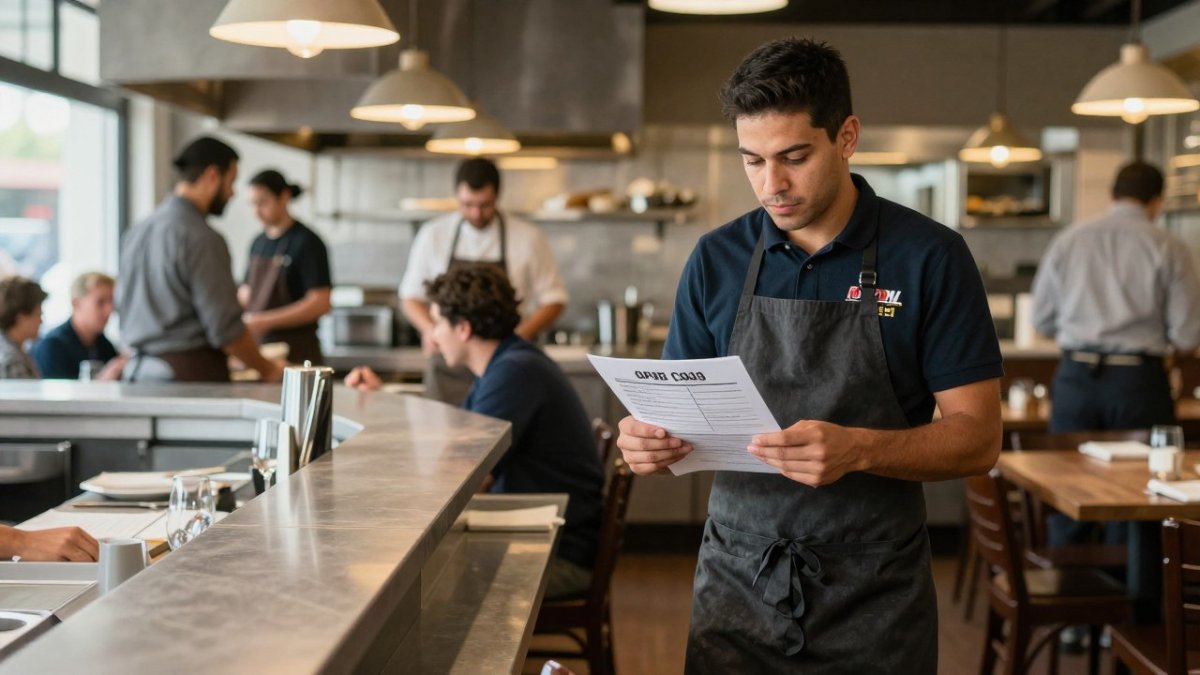
Start with the tasks that touch money and guests. Opening and closing routines. Prep lists. Recipe specs. Service steps.
What most guides miss is ownership. Every procedure needs a named owner who keeps it current.
Our restaurant operations consulting team helps brands build these systems before they scale.
Restaurant Franchise vs. Company-Owned Locations: Choosing Your Growth Vehicle
The choice between restaurant franchise vs. company-owned locations comes down to capital, control, and speed. Franchising grows faster with less of your own money. Company-owned locations grow slower but keep full control and full profit.
Answer three questions:
- Do you have capital to fund new units yourself?
- Is your playbook strong enough to hand to a partner?
- Do you want control of daily operations at every site?
If you answer no, no, and yes, stay company-owned for now. Our article on reduced risk in hospitality franchise development covers how to prepare.
Selecting Sites and Validating Markets Before You Sign
Site selection is where good brands lose money quietly. A weak site drains cash for years, and no amount of marketing fixes a bad location. The practical work is more specific: you need a trade-area model, a cannibalization check, and a demand-validation test before you commit capital.
Build a Trade-Area Model Before You Tour a Single Site
A trade area is the geographic zone from which a location draws most of its guests. For a fast-casual concept, that is often a short drive-time ring; for a destination or dinner-house concept, it can be much larger. Model it in three steps:
- Define the primary ring. Use drive-time or walk-time rings rather than radius circles, because a highway or a river can cut a ring in half.
- Count demand drivers inside the ring. Anchor tenants, office density, residential rooftops, hotels, hospitals, and schools all generate dayparts. Match the drivers to your concept’s peak dayparts, not to raw population.
- Estimate capture rate. Compare your expected sales per unit against the ring’s total addressable demand. If your projected sales require capturing an unrealistic share of the ring, the site is wrong no matter how good the rent looks.
Run a Cannibalization Check on Every New Site
Cannibalization is the sales your new unit takes from your existing units.
Map the overlap between the new trade area and each existing unit’s trade area. Then estimate the overlap share of existing sales and subtract it from the new unit’s projection. If the new unit only clears its investment hurdle after cannibalization, the gate should fail.
Validate Demand with a Low-Cost Test
A pop-up, a limited menu at an existing site, or a delivery-only test can confirm demand before you commit to a build. Set a pass threshold in advance, for example, a target number of transactions per day over a set number of weeks, and hold the line. If the test misses, the market is not validated, even if the site looks busy.
Score the Site on Total Occupancy Cost, Not Rent
Rent is only part of the cost of a site. Total occupancy cost includes base rent, percentage rent, common-area maintenance, taxes, insurance, and build-out amortization. Compare total occupancy cost as a percentage of projected sales against your target.
Review the lease with a clear eye on assignment and sublease rights, exclusivity clauses, and co-tenancy provisions, because those terms determine how much flexibility you keep if the site underperforms. When you plan new locations, controlling design and architecture costs matters too, so see our guidance on how to reduce design and architect costs when franchising.
Planning People, Training, and Supply Chain for Multi-Location Growth
Growth fails on people and supply long before it fails on demand. A brand that can’t staff a new unit or restock its top items will stumble in month one. The unique angle here is to plan them together, because the same growth gate that tests unit economics should also test whether you can staff and supply the next unit.
Build a Manager Bench with a Named Successor for Every Unit
A manager bench is the list of trained people who can lead a unit on day one. That means if a GM leaves, you promote from within rather than scramble.
Build the bench deliberately:
- Identify high-potential hourly staff early. Look for people who already train new hires, close the register, or solve guest problems without being asked.
- Give them a staged path. Shift lead, then assistant manager, then a supervised stint running a unit while the GM is on vacation.
- Certify before promotion. A manager should complete the same opening, closing, cash-handling, and food-safety checks your playbook requires before they take a unit.
Watch out: promoting the best hourly worker into management without a training path is the most common way brands lose both a strong employee and a unit’s performance at the same time.
Make Training Repeatable, Not Personality-Driven
Training that lives in one strong trainer’s head does not scale. Write the training program so a new hire can complete it before day one and a new manager can deliver it without the founder in the room. Cover the tasks that touch money and guests first: opening and closing routines, prep lists, recipe specs, service steps, and cash handling.
Plan Supply Chain Resilience Around Your Top Items
Supply resilience starts with a simple exercise: list your top 10 items by sales and, for each one, name a backup supplier and a clear spec. If a single supplier fails, your menu should still run.
Build purchasing leverage as you grow. Consolidate vendors where it makes sense, negotiate pricing tiers tied to volume, and keep contingency plans for the items that have no easy substitute.
Put People and Supply on the Expansion Gate
Before you open the next unit, confirm three things: a certified manager is named and trained, the training program is ready to run without the founder, and every top-10 item has a backup supplier and a spec. If any of the three fails, the gate fails, even if the unit economics look strong.
Building Your Expansion Roadmap with TNI Restaurant Consultants
A roadmap turns ambition into a sequence. It sets the gates, the metrics, and the people needed at each stage.
TNI Restaurant Consultants brings hands-on operating experience and proprietary tools. Our Zone of Purchase Acceptance framework shows where your concept fits in the market.
The benefits of hiring professional restaurant consultancy services are practical: better cost control, stronger unit economics, and lower risk at each gate. See our guide to the 12 benefits of hiring professional restaurant consultancy services to compare what an engagement delivers.
Expansion without a scorecard, gates, and a documented playbook is a gamble dressed up as growth.
Frequently Asked Questions
When is a restaurant ready to open a second location?
Look for consistent performance across at least four consecutive quarters: stable food and labor costs, positive guest feedback trends, and a management team that runs the first unit without the founder present daily. If your flagship still depends on the owner for day-to-day decisions, scaling restaurant brands too early usually multiplies problems rather than revenue. A readiness scorecard covering unit economics, systems, leadership, and capital gives you an objective answer instead of a gut feeling.
Should an emerging brand franchise or open company-owned locations?
Company-owned locations give you control and keep all margin, but they demand capital and management depth. Franchising moves expansion costs to operators and can accelerate growth, yet it requires documented systems, franchisee training, and brand consistency mechanisms that hold up across dozens of units. Most emerging brands blend both: company-owned units to prove and refine the model, then franchise expansion once restaurant operations standardization is complete and unit economics are repeatable.
What systems should a restaurant standardize before expanding?
Prioritize the systems that touch money and consistency: recipes with exact yields and portion specs, a purchasing and receiving process, labor scheduling tied to sales forecasts, opening and closing checklists, and a training program that certifies staff before they work a station. Add a weekly scorecard tracking food cost, labor cost, and guest satisfaction. If a new manager cannot run your unit from the documentation alone, you are not ready to add locations.
How can a restaurant grow without losing profitability?
Growth strains restaurant unit economics before it improves them. New units often carry higher labor costs, opening expenses, and management overhead for the first several months. Model each new location on conservative sales assumptions, hold a cash reserve covering at least six months of operating losses per new unit, and set decision gates that pause expansion if portfolio-level margins slip below your target. Controlled growth protects profitability while you build the infrastructure for the next stage.
