


By Robert Ancill, CEO, The Next Idea Group and Chairman, TNI Restaurant Consultants
There is a moment in the development of almost every successful restaurant company when growth stops being principally about restaurants and starts being about systems.
The first restaurant may succeed because the founder is present. The second benefits from the same energy, relationships and institutional knowledge. By the third or fourth location, however, something begins to change. Decisions that once took minutes require meetings. Food-cost variances appear between stores. Labor percentages diverge. General managers interpret operating standards differently. Technology that appeared perfectly adequate for one restaurant begins producing multiple versions of the truth.
By the fifth, tenth or twentieth location, the central question is no longer whether the restaurant concept works. The question is whether the restaurant operating model can reproduce performance without reproducing the founder.
This distinction sits at the center of our work at TNI Restaurant Consultants. Across restaurant concept development, hospitality consulting, restaurant operations, multi-unit expansion, turnaround assignments, franchise development and portfolio strategy, we repeatedly encounter businesses with strong consumer propositions whose growth is being constrained by operating architecture.
Capital can open restaurants. Capital cannot make them scalable.
Scalability emerges when restaurant operations, labor, procurement, technology, training, management systems, unit economics, guest experience and capital allocation are engineered to work together. When those components are disconnected, every additional restaurant adds complexity. When they are integrated, additional units can create operating leverage.
That is the difference between expansion and scalable growth.
Why Restaurant and Hospitality Growth Often Stalls
Restaurant growth rarely fails in one dramatic moment. More commonly, performance deteriorates incrementally as complexity expands faster than management infrastructure.
A founder who can personally review purchasing at three restaurants cannot perform the same function across 30. A chef who trained every opening team cannot personally protect recipe execution across 50 locations. A CFO cannot continue reconciling disconnected POS, inventory, scheduling and accounting reports as the portfolio expands indefinitely.
This creates what I describe as the complexity gap: the distance between the number of locations an organization operates and the number its management systems are genuinely capable of supporting.
In early-stage restaurant growth, entrepreneurial energy can temporarily bridge that gap. Eventually, systems have to replace heroics.
Chart 1: How the Growth Constraint Changes
|
Portfolio Stage |
Primary Management Challenge |
Typical Failure Point |
Required Capability |
|---|---|---|---|
|
1–2 locations |
Proving the concept |
Founder dependence |
Strong unit economics |
|
3–5 locations |
Replicating performance |
Inconsistent execution |
SOPs and management controls |
|
6–10 locations |
Coordinating complexity |
Labor, purchasing and reporting variance |
Integrated operating systems |
|
11–25 locations |
Building organizational leverage |
Corporate overhead expansion |
Regional management and automation |
|
25+ locations |
Protecting economics at scale |
Bureaucracy and brand dilution |
Portfolio intelligence and governance |
The implication for restaurant investors, private equity groups, hospitality developers and multi-unit restaurant operators is significant. Restaurant scalability should be tested before aggressive expansion begins, rather than after performance starts deteriorating.

Standardize the Economics, Localize the Experience
Standardization is frequently misunderstood in restaurant operations.
Operators sometimes fear that standardization will make a hospitality brand mechanical. The opposite can be true. Good restaurant operating systems protect the areas where consistency matters so that employees have greater freedom where human judgment creates value.
The operating economics should therefore be standardized aggressively. Recipe specifications, portion controls, purchasing standards, food safety procedures, labor deployment, opening and closing procedures, inventory controls, cash handling, service sequences and management reporting should not depend upon which manager happens to be working.
The guest experience can retain greater flexibility. Local sourcing, market-specific menu items, community programming, design details and service personality can adapt where they strengthen relevance. The strategic principle is straightforward:
Standardize what protects the economics. Localize what strengthens the relationship with the customer. For multi-unit restaurants, hotel food-and-beverage operations and hospitality investment portfolios, this distinction becomes increasingly important. Excessive standardization can suppress local relevance, while insufficient standardization produces operating variance. Scalable restaurant growth requires both control and flexibility.
Labor Is Usually the First System to Reveal Scaling Problems
Restaurant labor cost is often treated as a percentage to be controlled. At TNI Restaurant Consultants, we prefer to examine it as an operating-system output.
When labor costs increase, the immediate reaction is frequently to reduce hours. That may improve the weekly labor report while damaging service speed, table turns, guest satisfaction and revenue.
The better question is: Why does the operating model require this amount of labor to produce this level of revenue?
That question opens a much more useful discussion around restaurant productivity.
Kitchen layout, menu complexity, prep requirements, technology, scheduling, management structure, cross-training, service model and operating hours all influence labor efficiency. Labor optimization therefore cannot be separated from restaurant design, menu engineering or technology strategy.
A restaurant designed badly can carry unnecessary labor for decades. A menu containing too many low-velocity ingredients increases preparation, purchasing and inventory complexity. A fragmented technology stack creates administrative labor. A weak training program increases supervisory labor. An inconsistent service model creates scheduling inefficiency. This is why restaurant labor optimization should be approached structurally rather than cosmetically.
The Management Replication Test
One of the most revealing questions we ask when evaluating restaurant scalability is deceptively simple: How long does it take a newly appointed general manager to produce the economics of an experienced general manager?
If that period continually increases as the restaurant company grows, the organization may not actually possess a scalable operating system. It may possess experienced individuals carrying undocumented institutional knowledge.
That distinction matters enormously. Knowledge inside an employee’s head is valuable. Knowledge converted into training, systems, dashboards, SOPs, decision trees and management routines becomes enterprise value.
For restaurant investors evaluating acquisitions, this should form part of operational due diligence. A business with strong EBITDA but extreme dependency on a founder, chef or small group of senior managers carries a different operational risk profile from one producing similar economics through documented systems.
Restaurant Technology Should Remove Complexity, Not Digitize It
The restaurant technology industry has expanded enormously, yet many restaurant companies have accumulated technology rather than built technology architecture.
A typical multi-unit restaurant business may operate separate platforms for point of sale, inventory management, recipe costing, labor scheduling, payroll, accounting, loyalty, online ordering, reservations, delivery, kitchen display systems, purchasing, training and business intelligence.
Each platform may work independently. The strategic problem appears between them.
If POS data does not flow reliably into inventory, scheduling and accounting, management teams begin rebuilding information manually. Spreadsheets become middleware. Managers spend hours reconciling numbers rather than interpreting them.
The resulting administrative burden grows with every new restaurant.
Chart 2: From Fragmented Technology to Restaurant Intelligence
|
Operating Layer |
Fragmented Model |
Scalable Model |
|---|---|---|
|
POS |
Transaction record |
Central revenue data source |
|
Inventory |
Separate counts |
Sales-linked theoretical usage |
|
Scheduling |
Manager judgment |
Demand-informed labor planning |
|
Purchasing |
Vendor-by-vendor |
Portfolio procurement visibility |
|
Accounting |
Historical reporting |
Automated financial integration |
|
Loyalty |
Marketing database |
Customer behavior intelligence |
|
BI |
Spreadsheet consolidation |
Multi-unit real-time dashboard |
The objective of restaurant technology consulting should therefore not be to add more software. It should be to reduce informational friction.
At TNI Restaurant Consultants, our starting question when evaluating restaurant technology is increasingly: What management decision will this system improve, accelerate or automate? If the answer is unclear, the technology may simply be another subscription.
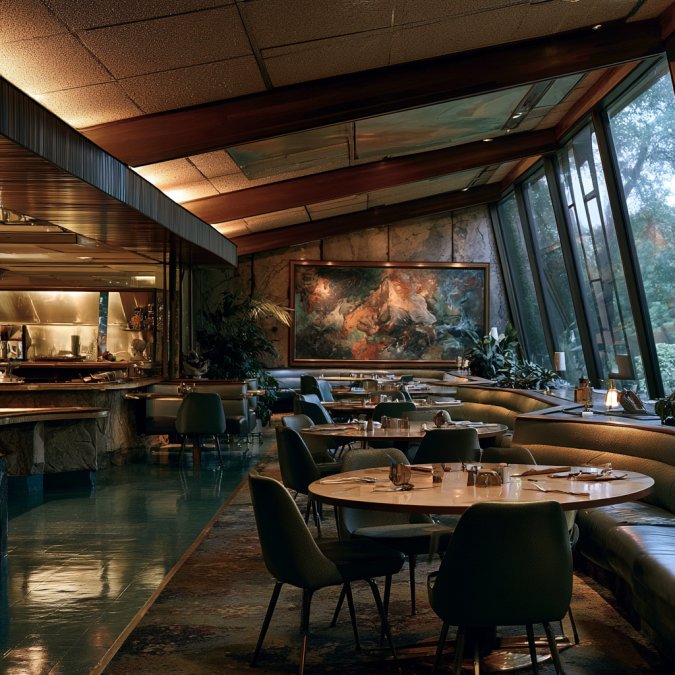
The Restaurant Data Architecture Required for Scale
A scalable restaurant technology stack should ultimately create a common operating language across the portfolio.
Revenue should connect to labor. Revenue should connect to product consumption. Product consumption should connect to purchasing. Purchasing should connect to inventory. Inventory should connect to menu profitability. Customer behavior should connect to marketing. All of those data streams should ultimately connect to financial performance.
This allows management to move from retrospective reporting toward exception-based management.
Instead of asking, “What happened last month?”, operators can ask, “Which locations moved outside their expected performance range yesterday, and why?”
That is a fundamentally different management capability.
The Restaurant Metrics That Matter Most for Scalable Growth
Restaurant revenue growth alone is a weak measure of scalability.
A restaurant company can increase system sales while simultaneously destroying unit economics, increasing corporate overhead and adding organizational fragility.
For restaurant investors and multi-unit operators, the more important question is whether economic consistency survives expansion. Five measures deserve particular attention.
Chart 3: Five Core Restaurant Scalability Metrics
|
Metric |
What It Measures |
What Strong Performance Suggests |
|---|---|---|
|
Four-wall EBITDA margin |
Unit profitability before corporate overhead |
Restaurant economics survive expansion |
|
Labor cost % of revenue |
Productivity and deployment efficiency |
Operating model remains manageable |
|
COGS variance |
Purchasing, waste and portion control |
Supply and kitchen controls are replicable |
|
Revenue per available seat |
Monetization of physical capacity |
Design, pricing and demand are aligned |
|
GM ramp time |
Transferability of management knowledge |
Operating system works without founder dependency |
These metrics become substantially more valuable when measured across locations rather than individually.
The objective is not simply to know average food cost. It is to understand food-cost variance between comparable restaurants.
It is not simply to know average labor percentage. It is to understand why restaurants with similar sales volumes require different labor structures. Variance is often where scalability problems first become visible.
Four-Wall EBITDA and the Illusion of Growth
Four-wall EBITDA remains one of the most useful indicators of restaurant unit economics because it isolates the economic performance of the restaurant before centralized corporate costs.
However, investors should study the distribution of four-wall EBITDA across the portfolio rather than relying exclusively on an average.
A company with ten restaurants averaging 15% four-wall EBITDA may appear attractive. But if three restaurants generate 22% while four struggle below 10%, the average disguises an operating replication problem.
Scalable restaurant businesses generally produce an increasingly predictable performance range as their systems mature. The goal is not identical restaurants. The goal is predictable economics.
Corporate Overhead: The Metric Hidden Between Unit Economics and Enterprise Economics
Restaurant operators naturally focus on store-level margins, yet one of the most important measures of multi-unit scalability sits above the restaurants: corporate overhead as a percentage of system-wide revenue.
A business can have excellent restaurant-level EBITDA while building a corporate organization that consumes the economic benefit of expansion.
Every new location should not require a proportional increase in accounting, HR, training, purchasing and administrative personnel. If it does, the company is expanding rather than scaling.
Chart 4: The Economics of Operating Leverage
|
Growth Pattern |
Unit Revenue |
Corporate Complexity |
Likely Result |
|---|---|---|---|
|
Revenue and overhead grow together |
Rising |
Rising proportionally |
Expansion without leverage |
|
Revenue grows faster than overhead |
Rising |
Rising slowly |
Positive operating leverage |
|
Revenue grows while unit margin falls |
Rising |
Rising |
Potential value destruction |
|
Revenue, margin and productivity improve |
Rising |
Controlled |
Scalable growth |
This distinction becomes particularly important for restaurant private equity, hospitality acquisitions, franchise systems and multi-brand restaurant groups, where portfolio value ultimately depends on the organization’s ability to absorb additional units efficiently.
Post-Acquisition Integration Is Where Restaurant Investment Returns Are Often Won or Lost
Restaurant acquisition strategy tends to focus heavily on valuation, financing and transaction structure. Less attention is sometimes given to what happens during the first 100 days after closing. Yet acquisition does not create integration. An acquired restaurant group may retain different POS systems, vendors, recipes, labor structures, reporting conventions, menu pricing logic and management practices. Left untouched, the investor has purchased revenue but also inherited complexity.
A disciplined restaurant post-acquisition integration plan should establish priorities before the transaction closes.
The first stage is operational stabilization. Protect the guest experience, retain critical employees and identify immediate financial or compliance risks.
The second stage is measurement alignment. Standardize definitions for sales, COGS, labor, EBITDA, discounts, comps, waste and management reporting.
The third stage is technology integration. Determine which systems remain, which migrate and which data should ultimately feed the portfolio reporting architecture.
The fourth stage is procurement and menu optimization. Identify purchasing leverage without destroying product quality or brand relevance.
The fifth stage is organizational integration. Clarify decision rights between restaurant-level management, regional leadership and corporate functions.
The sixth stage is growth readiness. Only after the acquired business produces reliable information should management determine whether additional locations should be opened.
This sequence matters because premature expansion can amplify inherited problems.
Restaurant Design Is Also an Operating System
One of the most underestimated relationships in hospitality investment is the connection between physical design and restaurant economics.
Restaurant architecture, kitchen planning, equipment specification, storage, bar configuration, server circulation, pickup areas and guest flow directly influence labor productivity, throughput and revenue capacity.
At The Next Idea Group and TNI Restaurant Consultants, this intersection between restaurant architecture, design and operations is particularly important because a restaurant can inadvertently lock inefficient economics into the physical space before opening.
If employees walk unnecessary distances between production and service points thousands of times each week, that inefficiency becomes labor cost. If storage is insufficient, purchasing frequency increases. If the kitchen cannot support menu demand during peak periods, ticket times increase. If bar design limits bartender productivity, beverage revenue suffers. If delivery and pickup traffic intersects with dine-in circulation, the guest journey deteriorates.
Restaurant design therefore should not be treated simply as an aesthetic exercise. Restaurant design is operational engineering expressed physically.
Menu Engineering Becomes More Important as the Portfolio Expands
The same principle applies to menus. A menu is simultaneously a consumer proposition, production system, purchasing specification, labor model and financial instrument. Every SKU creates consequences. Ingredients require procurement, storage, preparation, training and inventory management. Menu proliferation therefore increases operational complexity even when individual dishes appear profitable. This becomes particularly important in restaurant franchise development and multi-unit restaurant expansion. A menu that works beautifully under the supervision of the founding chef may become difficult to reproduce across multiple markets.
Menu engineering for scalable restaurant concepts should consequently examine contribution margin alongside execution complexity, ingredient cross-utilization, preparation time, equipment dependency and training requirements.
The highest-selling item is not automatically the most strategically valuable item. The strongest menu architecture produces attractive consumer choice while minimizing unnecessary operational complexity.
Capital Structure Should Support the Operating Strategy
Growth capital cannot compensate for weak restaurant economics.
Whether expansion is financed through traditional debt, private equity, franchising, sale-leaseback structures, development partnerships or sustainability-linked instruments, the capital structure should reflect the underlying maturity of the operating system.
Debt amplifies disciplined economics, but it also amplifies operating mistakes. Restaurant investors should therefore evaluate whether the organization possesses the management bandwidth and measurement infrastructure required to deploy additional capital intelligently.
The sequence matters:
Prove the economics → document the operating model → integrate the data → develop management capacity → deploy growth capital.
Reversing that sequence frequently creates expensive problems.
Hospitality properties have an interesting relationship with sustainability-linked financing because many environmental variables can be measured directly at property level.
Energy consumption, water consumption, waste diversion and certain sourcing measures can be tracked against documented baselines. In larger hospitality portfolios, this measurement infrastructure can support financing structures where borrowing terms are linked to agreed performance indicators.
The operational significance extends beyond ESG.
A restaurant or hotel capable of measuring energy, water, waste, purchasing and asset performance at property level already possesses part of the measurement architecture required for sophisticated multi-property management.
The broader lesson is that measurement disciplines often create benefits beyond the metric originally being measured.
A TNI Framework for Restaurant Scalability
From our work with restaurant operators, hospitality businesses, developers, investors and multi-unit organizations, we can reduce the scalability question to six interconnected dimensions.
Chart 5: The TNI Restaurant Scalability Framework
|
Dimension |
Strategic Question |
|---|---|
|
Economics |
Does the unit model remain attractive after management and occupancy realities are included? |
|
Operations |
Can another management team reproduce the result? |
|
People |
Can employees and managers be trained faster than the organization is growing? |
|
Technology |
Does information become easier or harder to manage as locations are added? |
|
Physical Design |
Does the restaurant environment improve productivity and throughput? |
|
Capital |
Can expansion be financed without weakening the underlying business? |
Weakness in one dimension tends to migrate into others.
Poor restaurant design becomes labor cost. Excessive menu complexity becomes food cost and training complexity. Weak technology becomes administrative overhead. Weak management systems become inconsistent guest experience. Poor capital allocation magnifies all of them.
That interconnectedness is why restaurant scalability cannot be solved by a single department.
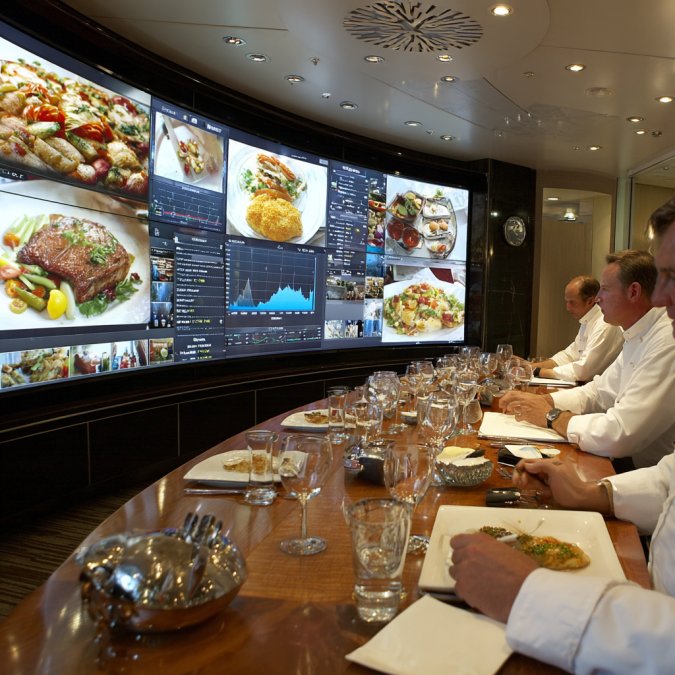
From Founder-Led Restaurants to Institutionally Scalable Businesses
The transition from founder-led hospitality business to scalable restaurant company requires a subtle shift in leadership. The founder’s job gradually changes from making decisions to designing the system through which good decisions are made.
That can be uncomfortable given entrepreneurs often create successful restaurants precisely because they possess unusual instincts, speed and attention to detail. Scaling requires translating those instincts into something other people can understand and reproduce. The strongest restaurant companies do not eliminate entrepreneurial judgment, intead they institutionalize its most valuable components.
Recipes become specifications. Instinctive scheduling becomes demand forecasting. Personal vendor relationships become procurement strategy. Founder-led training becomes structured learning. Weekly intuition becomes dashboards and operating reviews.
The business becomes less dependent upon memory and more dependent upon architecture. That is when a collection of restaurants begins becoming an enterprise.
The Next Phase of Restaurant Investment
The restaurant and hospitality investment environment increasingly rewards operators capable of combining consumer relevance with operating precision.
Great food remains important. Great service remains important. Distinctive restaurant design remains important. Brand remains important. But none of these characteristics independently creates scalability. The investment question is whether the organization can reproduce them economically.
For investors considering a restaurant acquisition, operators planning multi-unit expansion, franchisors developing new markets or hospitality companies seeking stronger restaurant profitability, scalability should therefore be evaluated as an operating capability rather than an ambition. The restaurant industry has never lacked concepts. What it frequently lacks are operating systems capable of carrying those concepts beyond the people who created them.
At TNI Restaurant Consultants, we believe the strongest hospitality businesses will increasingly be those that understand this distinction. They will connect restaurant strategy with operations, technology, menu engineering, design, labor, procurement, customer behavior and financial performance rather than managing each discipline independently.
Because the next restaurant should not simply add revenue, it should make the enterprise stronger.
Frequently Asked Questions
What are the key drivers of scalable growth in hospitality investments?
Scalable growth in hospitality investment comes down to three drivers: operational systems that work without the founder in the room, technology that connects data across properties, and capital structures that fund expansion without straining cash flow. Operators who standardize recipes, labor models, and reporting before opening unit five consistently outperform those who improvise each location. The goal is repeatability, not just revenue growth.
How do operational efficiencies impact hospitality asset valuation?
Buyers and lenders price hospitality assets on cash flow predictability. When your operational efficiency strategies reduce food cost variance, stabilize labor, and produce clean reporting, the asset looks less risky to a buyer. That lowers the cap rate they apply, which raises your valuation. A property with documented systems and consistent margins sells faster and at a higher multiple than one dependent on a single operator.
How can a restaurant company scale successfully?
Successful restaurant scaling requires repeatable unit economics, documented restaurant SOPs, transferable management training, integrated restaurant technology, disciplined purchasing, consistent menu execution and sufficient organizational capacity. Opening additional locations before these systems exist can multiply operating problems rather than multiply profits.
How can investors identify scalable hospitality business models?
Look for concepts with simple menus, short training curves, and unit economics that hold steady across different markets. A model that needs a star chef at every location does not scale. Check whether the operator has documented SOPs, a tech stack that connects locations, and a track record of opening units on time and on budget. These signals separate a scalable brand from a single successful restaurant.
What are the most important restaurant KPIs for multi-unit operators?
Important multi-unit restaurant KPIs include four-wall EBITDA, restaurant labor cost percentage, food and beverage COGS, sales per labor hour, average check, revenue per available seat, inventory variance, waste, ticket time, management turnover and general-manager ramp time. Portfolio-level variance between comparable restaurants can be as important as the average itself.
What is four-wall EBITDA in a restaurant?
Four-wall EBITDA measures restaurant-level earnings before corporate overhead and certain non-operating costs. It is commonly used to evaluate the underlying economic performance of individual restaurant locations and to compare unit economics across a multi-unit restaurant portfolio.
Why does restaurant labor cost increase during expansion?
Restaurant labor costs may increase during expansion because management structures become more complex, training requirements rise, new restaurants operate inefficiently during ramp-up, menus become harder to execute or scheduling systems fail to match labor deployment with demand. The solution is often operational redesign rather than simply reducing scheduled hours.
How does restaurant technology support multi-unit growth?
Restaurant technology can support multi-unit growth by connecting POS, inventory, scheduling, purchasing, accounting, loyalty, online ordering and business intelligence. Integrated restaurant systems reduce manual reporting and allow management teams to identify performance exceptions across multiple locations more quickly.
What makes a restaurant concept scalable?
A scalable restaurant concept combines attractive consumer demand with repeatable economics. It should be possible to reproduce food quality, service, throughput, labor productivity and financial performance without continuous involvement from the founder or original operating team.
Why is restaurant menu engineering important for scalability?
Restaurant menu engineering evaluates profitability, popularity and operational complexity. For multi-unit restaurants, menu engineering can also improve ingredient cross-utilization, reduce waste, simplify preparation, lower training complexity and increase kitchen throughput.
How does restaurant design affect profitability?
Restaurant design affects profitability through seating capacity, kitchen productivity, employee travel distance, storage, equipment configuration, bar throughput, table turns and customer flow. Poor restaurant design can create permanent labor and throughput inefficiencies, while thoughtful restaurant architecture can support stronger operational performance.
What should restaurant investors examine before acquiring a restaurant company?
Restaurant investors should examine unit economics, four-wall EBITDA, restaurant-level variance, management dependency, labor productivity, food-cost controls, leases, technology architecture, menu complexity, capital expenditure requirements, management turnover and the company's ability to integrate future acquisitions.
What is restaurant post-acquisition integration?
Restaurant post-acquisition integration is the process of bringing an acquired restaurant business into a common operating, financial and technological framework. It can include management reporting, POS migration, purchasing, accounting, labor systems, menu analysis, training and organizational restructuring.
When should a restaurant company hire a restaurant consultant?
Restaurant consulting can be particularly useful before opening a restaurant, during multi-unit expansion, before franchising, during an operational turnaround, before or after a restaurant acquisition, when food or labor costs are deteriorating, when restaurant technology has become fragmented or when management wants an independent assessment of restaurant profitability and scalability.
How can restaurant operators improve EBITDA?
Restaurant EBITDA improvement usually requires coordinated attention to revenue, menu contribution, food and beverage cost, labor productivity, purchasing, operating expenses, pricing, throughput and management controls. Cutting costs indiscriminately can damage revenue, so restaurant profit improvement should focus on productivity and contribution rather than cost reduction alone.
What is the difference between restaurant growth and restaurant scalability?
Restaurant growth means the business becomes larger. Restaurant scalability means the business can become larger without equivalent growth in complexity, overhead or management dependency. A company can therefore grow revenue while becoming less scalable.
Why is general-manager development important in multi-unit restaurants?
General managers translate the restaurant operating model into daily execution. A company's ability to recruit, train and develop GMs at approximately the same pace as it adds restaurants is therefore a critical constraint on multi-unit restaurant growth. Increasing GM ramp time can indicate that operating knowledge remains dependent on individuals rather than systems.
How should private equity evaluate a restaurant platform?
Restaurant private-equity due diligence should go beyond historical EBITDA and evaluate the durability of the operating model. Important questions include whether margins transfer across markets, whether management can absorb additional locations, whether restaurant technology supports portfolio reporting, whether the menu scales operationally and whether corporate overhead produces operating leverage as system sales increase.
What role does TNI Restaurant Consultants play in restaurant growth strategy?
TNI Restaurant Consultants works across restaurant strategy, concept development, operational improvement, menu engineering, restaurant technology, financial performance, multi-unit growth and hospitality investment. The broader TNI platform also connects these disciplines with restaurant architecture, interior design and physical development, allowing operational decisions and the built environment to be considered as parts of the same commercial system.
What is the biggest mistake restaurant companies make when expanding?
One of the most common mistakes is treating the success of the first restaurant as proof that the business model is scalable. A successful restaurant proves consumer demand and local execution. Scalability requires the additional proof that another management team, in another location, can reproduce comparable economics through the operating system.
How do restaurant SOPs support franchise growth?
Restaurant SOPs convert operating knowledge into repeatable processes covering food preparation, service, labor deployment, food safety, inventory, purchasing, opening and closing procedures, cash handling and management routines. In franchise restaurant systems, documented procedures become especially important because execution has to transfer across different owners and management teams.
What is the ultimate test of a scalable restaurant business?
The ultimate test is whether the restaurant company can continue producing strong guest experiences and attractive unit economics as the founder becomes progressively less involved in individual operating decisions. When performance resides in the system rather than exclusively in particular individuals, the organization has begun to achieve genuine scalability.