
Restaurant Turnaround & Strategic Repositioning Services

For Restaurant Groups, Hotel Operators, and Hospitality Investors
Restaurant underperformance rarely happens suddenly. Revenue decline, margin compression, declining guest traffic, negative cash flow, rising food and labor costs, brand fatigue, and operational inefficiency build gradually until profitability becomes unsustainable. In today’s hyper-competitive hospitality industry, restaurants and hotel F&B divisions cannot afford misalignment between brand positioning, pricing strategy, operational execution, and evolving consumer behavior.
In 2026, restaurant turnaround consulting requires more than cost reduction or menu redesign. It demands strategic repositioning, profit optimization, financial restructuring, brand recalibration, and data-driven operational transformation. TNI Consultants delivers executive-level restaurant turnaround services focused on restoring EBITDA, improving cash flow, strengthening contribution margins, and rebuilding long-term enterprise value.
We work with independent restaurant operators, multi-unit restaurant groups, hotel food and beverage departments, franchise systems, private equity-backed hospitality brands, and ownership groups seeking measurable performance recovery. Our approach integrates hospitality strategy, financial diagnostics, operational restructuring, and consumer trend intelligence into a unified turnaround framework.
At the core of our methodology is Trend Mapping, which evaluates your restaurant concept, brand positioning, competitive landscape, and market relevance within emerging hospitality trends, demographic shifts, digital dining behavior, and consumer spending patterns. Restaurants fail when concepts become strategically outdated. Our role is to identify positioning gaps and realign the brand with current and forward-looking market demand.
Our Trend Audit examines guest experience design, service standards, marketing effectiveness, pricing architecture, digital presence, brand storytelling, and operational systems. We assess whether your restaurant operations reflect modern hospitality expectations, including experiential dining, value perception, speed of service, menu transparency, and technology integration. This audit reveals disconnects between leadership assumptions and real guest behavior.
Through our proprietary Customer Tolerance Index (CTI), we analyze pricing elasticity, guest loyalty thresholds, service friction tolerance, and perceived value sensitivity. In a high-inflation environment with aggressive competitive pricing, understanding customer tolerance is critical to margin expansion and sustainable revenue growth. CTI allows C-suite leaders to implement strategic price increases, portion adjustments, and service model shifts with confidence and measurable risk assessment.
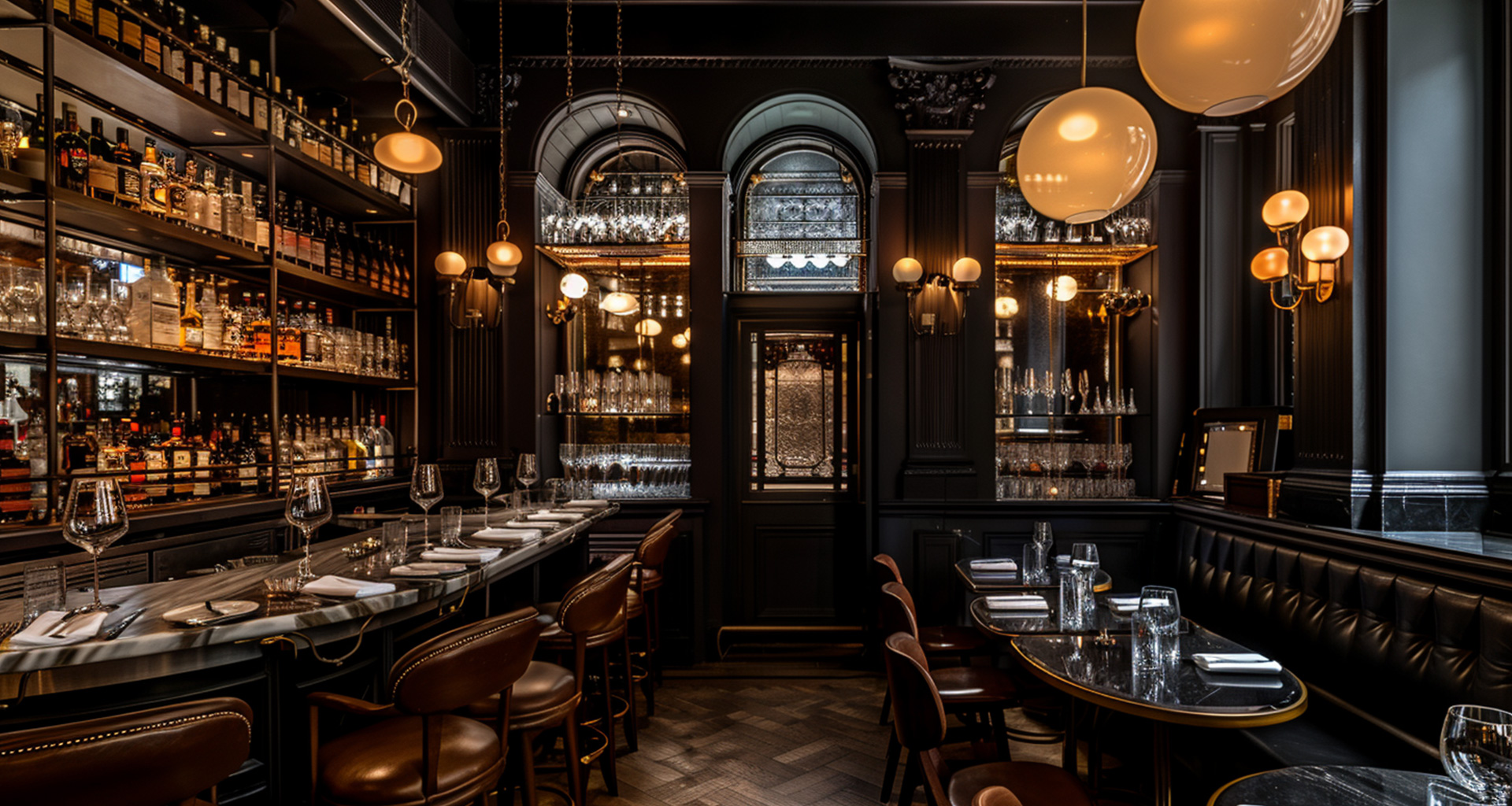
Advanced menu engineering remains one of the most powerful profit optimization tools in restaurant consulting. We conduct comprehensive menu performance analysis, contribution margin evaluation, product mix optimization, SKU rationalization, labor impact assessment, and pricing psychology alignment. The menu is treated as a revenue engine and margin control system, not a static design piece. The result is improved food cost percentage, higher gross profit per cover, reduced operational complexity, and stronger kitchen efficiency.
Beyond revenue strategy, we conduct full P&L analysis, balance sheet review, labor modeling optimization, vendor contract evaluation, supply chain cost management, lease negotiation advisory, and when necessary, debt restructuring guidance. Restaurant turnaround requires financial transparency, operational accountability, and executive leadership alignment. In select engagements, we provide interim restaurant management or executive oversight to ensure strategic implementation and measurable KPI improvement.
TNI Consultants brings more than three decades of global hospitality experience across restaurant operations, hotel F&B management, multi-unit brand scaling, and investment-backed growth platforms. We understand EBITDA recovery, cost containment, revenue management strategy, capital deployment, and long-term brand valuation. Our advisory work bridges operational excellence with strategic growth planning.

 Clients receive a comprehensive executive diagnostic report, opportunity prioritization framework, profit recovery roadmap, and 90–180 day operational reset plan designed to stabilize cash flow, improve margins, strengthen guest satisfaction metrics, and reposition the brand competitively. Our objective is sustainable profitability, operational resilience, and scalable growth, not temporary correction.
A modern restaurant turnaround is not simply business rescue. It is strategic restructuring, operational transformation, brand revitalization, and market repositioning aligned with current hospitality economics. In a volatile restaurant industry defined by labor shortages, supply chain instability, pricing pressure, and shifting consumer expectations, proactive recalibration determines survival.
For restaurant CEOs, hotel general managers, CFOs, asset managers, and hospitality investors seeking measurable financial improvement and long-term competitive advantage, TNI Consultants delivers structured, data-driven, performance-focused restaurant turnaround solutions.
If revenue is declining, margins are tightening, or brand relevance is fading, the market is signaling for strategic action. The advantage belongs to leadership teams willing to implement intelligent restructuring before performance deterioration becomes irreversible.
Talk to TNI Restaurant Consultants for the Next Market Cycle

A restaurant turnaround consultant provides strategic restaurant restructuring, operational diagnostics, and financial performance analysis designed to restore profitability and improve EBITDA. This includes comprehensive P&L review, menu engineering optimization, pricing strategy development, labor cost alignment, brand repositioning, and hospitality market analysis. The objective is to stabilize cash flow, strengthen contribution margins, and reposition the restaurant or hotel F&B division for sustainable growth.
You should hire a restaurant turnaround consulting firm when you experience declining restaurant sales, shrinking profit margins, rising food and labor costs, negative cash flow, weak EBITDA performance, or loss of market relevance. Multi-unit operators, hotel food and beverage directors, and private equity investors often engage turnaround specialists when performance indicators signal structural operational inefficiencies rather than temporary slowdowns.
Restaurant profitability improves through strategic menu engineering, food cost reduction strategies, labor productivity optimization, vendor contract renegotiation, pricing elasticity analysis, and operational systems refinement. True restaurant profit optimization focuses on increasing contribution margins, improving revenue per available seat hour (RevPASH), strengthening average check growth, and aligning pricing with perceived guest value.
Hotels improve food and beverage margins by implementing hotel F&B profit optimization strategies, restructuring outlet concepts, optimizing banquet pricing models, reducing inventory complexity, and improving labor scheduling efficiency. Transforming hotel restaurants from cost centers into revenue-generating hospitality assets requires financial restructuring, menu margin analysis, and strategic repositioning aligned with guest demographics and competitive benchmarks.
EBITDA improvement in restaurants refers to increasing earnings before interest, taxes, depreciation, and amortization through cost restructuring, revenue optimization, pricing strategy refinement, and operational efficiency improvements. For restaurant groups and private equity-backed hospitality brands, EBITDA growth directly enhances enterprise valuation and investment returns.
Restaurant underperformance is typically caused by outdated brand positioning, weak competitive differentiation, poor menu profitability mix, inefficient labor models, pricing misalignment, and failure to adapt to evolving consumer dining trends. In many cases, declining restaurant profitability stems from strategic misalignment rather than lack of effort.
A structured restaurant turnaround plan often delivers measurable margin improvement within 90 to 180 days. Full financial stabilization, EBITDA recovery, and brand repositioning may take six to twelve months depending on capital investment, operational complexity, and leadership execution capability.
Many struggling restaurants and underperforming hotel F&B outlets can be repositioned successfully if market demand exists and ownership commits to operational restructuring and strategic reinvestment. Early intervention significantly improves turnaround success rates and protects hospitality asset value.
Menu engineering in a restaurant turnaround is the systematic evaluation of product mix performance, contribution margins, food cost percentages, pricing psychology, and operational complexity. Advanced menu optimization increases gross profit, reduces kitchen inefficiencies, and strengthens overall restaurant financial performance.
Increasing restaurant sales without discounting requires strategic brand repositioning, improved guest experience design, upselling systems, pricing architecture adjustments, and marketing optimization. Rather than eroding margins through discounts, successful restaurants focus on value perception, menu optimization, and experience differentiation.
The Customer Tolerance Index measures pricing sensitivity, service tolerance thresholds, perceived value elasticity, and guest loyalty behavior. This data-driven pricing strategy tool helps restaurant operators increase menu prices, adjust portion sizing, or modify service models without triggering demand loss or negative brand perception.
Private equity restaurant turnaround strategies focus on EBITDA expansion, operational discipline, cost containment, leadership restructuring, and valuation enhancement. Consultants align restaurant performance improvement initiatives with investment timelines, exit strategies, and capital deployment objectives.
Key restaurant financial metrics reviewed during a turnaround include EBITDA margin, prime cost percentage, labor cost ratio, food cost percentage, contribution margin by item, cash flow performance, same-store sales trends, and revenue per available seat hour. These indicators determine both operational health and enterprise valuation.
Modern restaurant turnaround consulting integrates data analytics, hospitality trend mapping, consumer behavior analysis, pricing elasticity modeling, digital brand positioning, and operational systems engineering. Unlike traditional consulting models focused solely on cost cutting, today’s approach balances profitability, relevance, scalability, and long-term competitive positioning.
Industries that benefit include independent restaurants, multi-unit restaurant groups, franchise systems, hotel food and beverage divisions, resort dining operations, airport hospitality concepts, and investor-backed hospitality brands. Any organization experiencing declining restaurant margins, operational inefficiencies, or EBITDA erosion can benefit from structured hospitality turnaround advisory.